


_edited.png)

The Fashion Industry’s Clarity Era: How Structure Now Determines Brand Survival

The fashion industry is in another cycle of contraction, but this one feels fundamentally different from past downturns. It is not simply about consumer spending slowing or trends shifting. It is structural. And structure, for many brands and retailers, is where the real crisis lives.
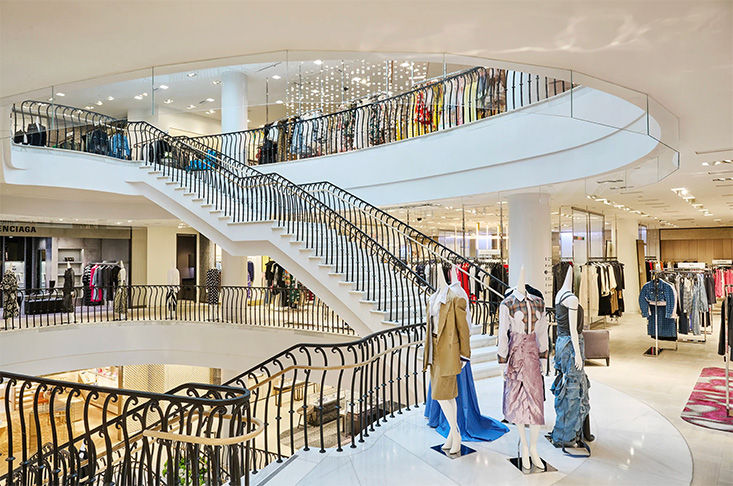
Recent headlines surrounding the Saks restructuring and bankruptcy filings are not isolated events. They are signals. Department stores have historically acted as both gatekeepers and growth engines for brands. When those institutions begin struggling to maintain liquidity and relevance, it exposes fragility throughout the entire fashion ecosystem, from emerging labels to established contemporary brands. Brand survival has become the primary objective for many within the segment.
What we are witnessing is not just a retail reset. It is an operational reckoning.
The End of Complexity as a Growth Strategy
For years, assortment expansion was treated as growth strategy. More brands, more capsules, more collaborations, more SKUs. Retailers expanded floors, brands expanded categories, and both assumed breadth would equal momentum.
Today, over-assortment has become one of the most expensive liabilities in the industry.
Retailers drowning in brand duplication and unfocused assortments are finding themselves unable to clearly communicate identity to customers. When everything is offered, nothing feels essential. The result is slower sell-through, increased markdown pressure, and buyers forced into reactive rather than strategic decision-making.
Brands are facing a parallel challenge. Many expanded into adjacent categories without the financial investment, the right operational infrastructure, margin discipline, or a long-term product architecture. What once looked like brand evolution is now revealing itself as fragmented growth.
Complexity is no longer perceived as creative abundance. It is operational debt.
The Rising Cost of Visibility
Another powerful shift is happening in customer acquisition. Digital advertising... once the fastest path to brand awareness, has become significantly more expensive and less predictable.
Brands built primarily on paid acquisition are facing an uncomfortable reality: visibility alone does not create viability.
Effort, content volume, influencer seeding, and frequent drops can generate attention. But without strong retention, repeat purchasing behavior, and clear brand positioning, marketing becomes a treadmill with rising costs and diminishing returns.
Paid acquisition remains an important growth tool, but it is increasingly effective only when supported by strong product-market fit, customer loyalty, and brand clarity.
Brands that rely solely on being seen often struggle to sustain momentum. Brands that focus on being remembered, and consistently returned to, are proving far more resilient.
Founder Bottlenecks Are Emerging as Risk Factors
The industry has long celebrated founder-led storytelling and visionary creative direction. While founder energy can launch a brand, it can also unintentionally stall it.
Many companies today are operationally dependent on a single individual for decision-making, product approval, brand direction, and strategic growth. This creates bottlenecks that limit scalability, delay execution, and increase organizational burnout.
Investors, retailers, and partners are increasingly evaluating whether brands can function independently of founder bandwidth. Leadership clarity and distributed accountability are becoming signals of maturity and longevity.
In today’s environment, a brand that cannot operate without its founder is often viewed as a brand that cannot scale.
The Loyalty Gap
One of the most telling indicators of brand vulnerability is the absence of repeat customers. Many labels have successfully generated initial excitement but failed to build a consistent base.
Without loyalty, revenue becomes event-driven rather than predictable. Brands rely on newness and promotional cycles to sustain cash flow, which weakens margins and dilutes brand equity over time.
Customer loyalty is no longer a marketing outcome. It is a product, merchandising, and brand clarity outcome.
Consumers are still spending. They are simply choosing to spend with brands that feel distinct, trustworthy, and consistent.
Structure Is No Longer Optional
For much of modern fashion, structure was often treated as a constraint on creativity. Today, it has become the foundation that allows creativity to survive.
Brands that are thriving share several common traits:
Clear positioning that translates across product, messaging, and retail strategy
Defined economic models that support sustainable growth and healthy margins
Operational systems that allow teams to execute without constant reinvention
Leadership roles with accountability and decision clarity
Product strategies built around continuity and long-term brand architecture
Structure does not remove creativity. It protects it.
When brands operate without systems, creativity becomes chaotic and inconsistent. When brands operate with clarity, creativity becomes recognizable and scalable.
The New Competitive Advantage: Organized Creativity
The next generation of successful brands will not necessarily be the loudest or the fastest. They will be the most self-aware.
Retail buyers, investors, and consumers are all becoming more discerning. They are looking for brands that demonstrate confidence in their identity, discipline in their operations, and consistency in their execution.
Organized creativity is emerging as a new competitive advantage. Brands that can deliver strong aesthetic vision supported by strategic clarity will succeed.
These are the brands that scale without burnout. They attract long-term partnerships. They maintain margin health and they build customer bases that grow through trust rather than novelty alone.
The Path Forward
The fashion industry is refining. The brands that will struggle in this environment are not necessarily those with weaker design or lower marketing spend. They are the ones without operational clarity, economic discipline, or a defined identity.
The brands that will lead the next era will understand that visibility, effort, and constant product drops are not substitutes for clarity.
They will know who they are.
They will know how they make money.
They will know how their teams function healthily
They will build systems strong enough to support creativity, not compete with it.
Fashion is entering its clarity era. And for brands willing to embrace structure, it may just become one of the most opportunity-rich periods the industry has seen in decades.


Comments